
Perimenopause and Depression Dips - What No One Tells You
If you are in your 40s and experiencing days that feel inexplicably heavy - where nothing excites you, where getting off the floor feels like an achievement - this article is for you. And I want you to know that someone who teaches courage and transformation has also been on that floor.
Perimenopause affects more than our hormones. Sometimes it affects our will to get up. And almost nobody warns us about that.
In This Article
1. What no one warned me about
2. The shame I carried alongside it
3. The confirmation
4. What quietly held me through
5. What I want to leave you with
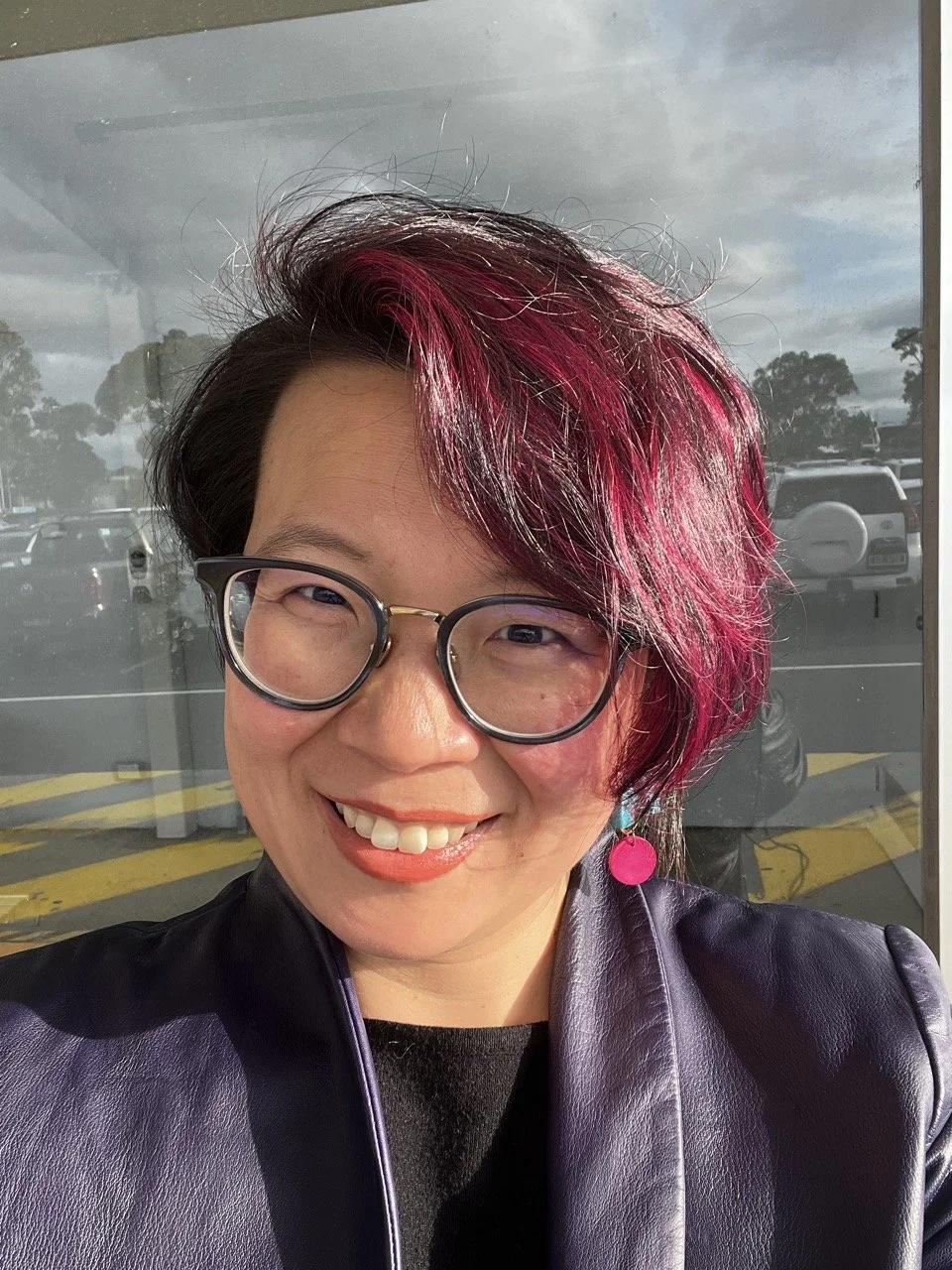
The photo above was taken in September 2024. I was 42.
From this photo, one would think . Fabulous hair, soaking in the sun on a trip in Sydney.
In reality, I was in the middle of what I now call the depression dips of perimenopause. And I told very few people, because I didn't really know what it was.
What no one warned me about
We hear about hot flushes. Irregular cycles. Brain fog. Sleep disruption.
Nobody warned me about the dips
The days where life felt strangely heavy for no clear reason. Where I would drop, seemingly out of nowhere, into a kind of numbness I didn't recognise. No energy. No desire to leave the house. Nothing exciting me.
On the worst days, it was hard to get out of bed. Some days I didn't make it off the living room floor.
I want to say this plainly, because I feel there's not enough awareness around this. If you've been there, you'll know exactly what I mean. And if you're there now, I want you to know that someone who teaches courage and transformation has also been on that floor.
Working from home as a life coach, facilitator and consultant, there were long periods of time where I simply didn't work. Those were probably the darkest moments - not just the emptiness itself, but the silence around it. The sense that I was disappearing from my own life and nobody knew.
The one thing that kept me tethered was my weekly Biodanza class. Even when I had no motivation, that commitment got me out of the house. It gave me structure, connection, a reason to write my weekly newsletter, to show up and guide others, to find enough inspiration to plan and deliver something. Those hours on the dance floor in front of my class allowed me to feel into the part of me that I was familiar with.
After a few days of heaviness, the energy would return. I could step out of my house and go for a walk. I could face life again. And I'd carry on, though subconsciously not quite knowing when it would come back. That uncertainty was its own exhaustion - the relief of feeling okay again, shadowed by the knowing that it wasn't over.
This wave went on for about 18 months.
The shame I carried alongside it
I haven't talked much about this period, and to be honest, I felt…
Shame.
Deep Shame.
As a Life Coach and Biodanza Facilitator - someone whose work is literally about guiding others through life transitions - I felt I had no right to stand in front of others. How could I hold space for others when I could barely hold myself? I felt a deep, self-imposed pressure to live in alignment with what I teach. To be the role model. To be the guide.
So I kept it quiet. I showed up. I facilitated. I coached. And then I went home and sometimes didn't move for the rest of the day.
The hardest part wasn't the dips themselves. It was showing up anyway.
There were coaching calls I took during that period where I felt like a complete fraud. Sitting across from a client who was navigating their own challenges, holding space with full presence - while quietly knowing I hadn't showered that day.
I want to share this with you and allow it land.
There is a particular type of exhaustion that comes from giving what you're not sure you have. I cared deeply about every person I worked with. And yet the gap between who I appeared to be on the outside and what was happening inside was enormous - and maintaining that gap takes a lot of energy.
The self-imposed pressure to be a role model - to live visibly in alignment with what I teach - meant that struggling in private felt incongruent. Not only to my clients, but to myself. I was teaching courage while feeling too ashamed to speak about what I was actually living. I was guiding others through transition while pretending I wasn't in one myself.
That is the particular cruelty of being a coach while being in the middle of the dark night of the soul. The very skills that help you hold others - presence, attunement, the ability to stay regulated - can also make you very good at hiding.
The confirmation
It wasn't until just before I left for Europe on my big adventure - after those 18 months - that I spoke to another mentor about what I'd been experiencing:
"You know, this is another sign of perimenopause."
I felt relief move through my whole body when she said that. Not a small relief - a deep one that landed in the heart and womb.
Relief that what I had been living had a reason. Relief that it wasn't a failure in my learnings and practice or proof that I was a fraud. Something was happening within me that was beyond my control - and that knowledge, as simple as it sounds, gave me room to breathe for the first time in a long time.
Perimenopause is not just hot flushes and irregular cycles. It can affect mood, energy, sleep, and our tolerance for stress in ways that can look and feel exactly like depression. And most women are navigating it without ever being told that.
I think about the 18 months I spent in silence, carrying shame that was never mine to carry, and I feel grief and sadness at how little most of us are prepared for what this transition can actually involve.
What quietly held me through
It wasn't all isolation. Life still moved through me in unexpected ways. I also found a deep connection with a man for a few months where those moments together allowed me to drop deep into the parts of myself that had been longing for deep connection. Yes, it was one of those days where I'd not showered and been lying on the floor all day!
Looking back, I can see the things that supported me quietly and consistently. I hope you find some relief in reading what kind of support may be helpful for you.
Asking for support. This was not easy for me. It was challenging because I didn't want to admit to something so profound that I'm supposed to know what to do. It wasn't because I couldn't ask for help, but I was afraid of people judging me or recommending pathways that would not have been helpful or in alignment with how I live my life. I asked close friends and neighbours to check in on me during that time. Just knowing someone was going to call, or knock, made the heaviest days feel slightly less isolating. I was ensuring that I didn't disappear completely.
Building a support crew. I worked with my coach, an osteopath, a psychologist, and a functional GP. Each of them held a different piece of what I was navigating. My coach helped me stay connected to myself and brought the embodiment tools I had immersed myself in back to my awareness. My osteopath worked with my body - because the nervous system exhaustion was physical and emotional, and he held such strong containers that felt safe for my body to express some deep shadows. My psychologist supported me through EMDR, to help me unravel the stories I held stored in my body. My functional GP looked at what was happening hormonally and physiologically rather than asking if I wanted antidepressants. A functional GP differs from a standard GP in that they look at the whole system - nutrition, hormones, gut health, nervous system - rather than treating symptoms in isolation. Having people who understood that this was a whole-body transition made a significant difference.
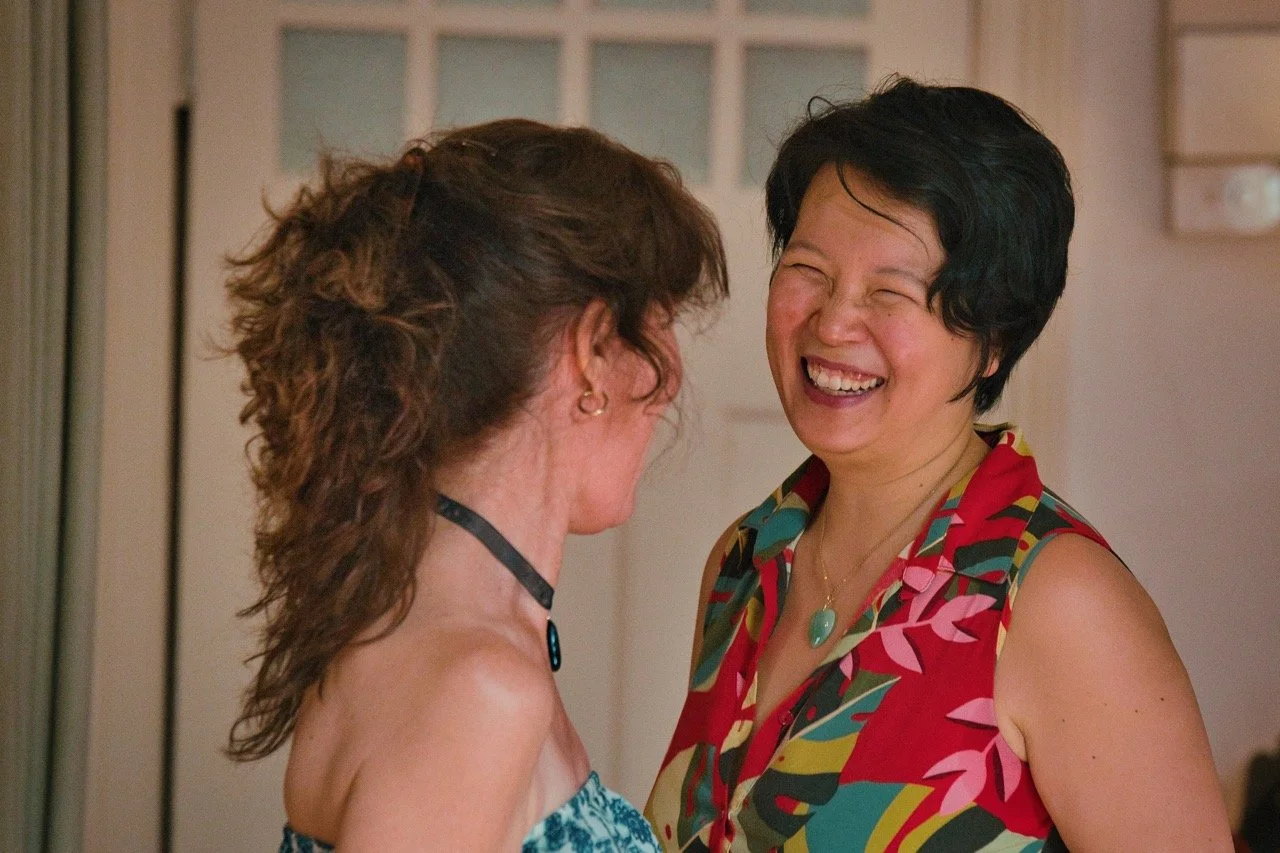
Movement that felt safe. Dancing tango was one of my weekly anchors. There is something about partner dancing - the connection, the presence required, the physical connection with another person - that brought me back into my body in a way that nothing else quite did. It didn't fix anything. But it reminded me I was still in there.
Regular practices, even small ones. Meditation. Movement. Women's circles. Returning to these, showing up just as I am, helped to regulate a nervous system that was genuinely depleted. I could see how easily I moved into fawn, freeze, fight or flight responses during that time. The practices gave me somewhere to come back to.
Buddy coaching. Having a fellow coach to exchange sessions with was quietly significant. It meant I had a structured, boundaried space to be coached rather than always being the one doing the coaching. She helped me see areas in my life that I was blindsided by, and in turn, it gave me a deep sense of purpose in guiding her to what she couldn't see.
Sunshine and movement when I could. It wasn't regular, but it was a gentle remembering. On the days when I could get outside, it helped.
Sleep was its own challenge throughout this period. I have also experienced some old stories around sleep from when I was a child, and this was amplified during this period.
What I want to leave you with
For me, the shift came with a decision to shake up my life entirely - to sell everything and buy a one way ticket to Europe. That trip became my reset button in ways I am still discovering. I know that is not available to everyone, and it is not the only path. But I share it because sometimes the body is asking for something bigger than a practice or a conversation. Sometimes it is asking for a change. The courage to change that comes from deep within.
What the mystics call the Dark Night of the Soul - that period of profound emptiness and disconnection - often precedes transformation. As an initiation into the woman you are becoming.
If you are in it right now, it may not feel like an initiation. It may just feel like the floor.
You do not have to wait until you understand it to ask for support. You do not have to have the language for it. You just have to let one person in.
One person. One conversation. One crack in the silence is all it takes for something new to enter.
If this stage of life is bringing unexpected emotional shifts for you - dips, numbness, a heaviness that comes and goes without explanation - you are not navigating this alone.
I offer 1:1 sessions for women moving through life transitions. The invitation is open whenever you feel ready.
Explore more in The Perimenopause Diaries, or reach out to work together.